Showing posts with label elections. Show all posts
Showing posts with label elections. Show all posts
Wednesday, July 4, 2012
A reason to celebrate
(Reposted from Mischiefs of Faction)
Want a reason to celebrate this Independence Day? Try this: elections. Yes, elections can be annoying, and if you live in a swing state, you are undoubtedly already being hammered with mind-numbing attack ads, with Republicans claiming that everything that Democrats do is craven or evil and vice versa.
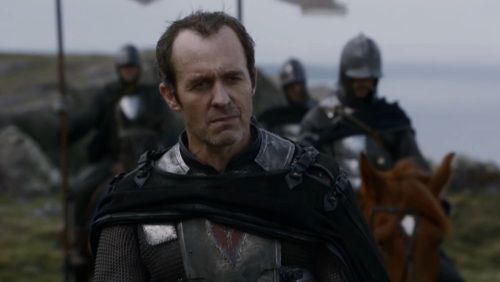
But what's the alternative? I've spent far too much of my leisure time in the last year listening to the History of Rome podcast and watching "Game of Thrones," and one thing those tales drive home is the challenge of succession. Many (perhaps most?) of the battles fought by soldiers of the Roman Empire were fought against other Roman soldiers, either putting town a rebellion or taking the throne from a usurper. Passing power along by bloodline can help -- at least it's some sort of system -- but it can create just as many problems when an heir proves incompetent or there are multiple legitimate claimants. One of the reasons for the successes of the Roman emperors of the 2nd century AD was that most of them did not have male children -- they were able to choose qualified successors and groom them for leadership. Marcus Aurelius, of course, did produce a male heir, and he turned out to be an insane Joaquin Phoenix, ending the empire's century of competence.
I find this important because the Roman Empire was pretty much the most advanced civilization the world had ever seen. It had sophisticated systems of currency and trade, an advanced legal system, a functional bureaucracy, not to mention its amazing military capabilities. But they were never able to resolve the problem of succession of power.
And yet this is something we take for granted today. Elections are fought fiercely, but they end. The results are rarely disputed, and basically never with violence. We do not fear for our lives if we pick the wrong presidential candidate, and we do not waste blood and treasure putting down rebellions and ousting usurpers.
No, we're not the only nation to figure this out, but it's nonetheless something to be proud of, especially since so many advanced societies before us failed on this point. So this Independence Day, let's celebrate by volunteering for a candidate, donating money to a campaign, or just watching an attack ad.
Happy Fourth.


Tuesday, March 13, 2012
How not to cover academic research: Obamacare edition
I was pleased to see how much coverage the paper on the health reform vote I did with Brendan Nyhan, Eric McGhee, John Sides, and Steve Greene received last week. While I see this as an encouraging sign for both academia and political journalism (and blogging!), it also serves as a reminder of the different perspectives and professional goals of academics and reporters.
Basically, we analyzed the impact of a two-year old roll call vote on an election that occurred a year and a half ago. While that may be interesting scholarship to some, it's not really "news," in the sense that it's not, well, new. What is potentially newsworthy is the idea that the effect we reported in the paper -- voters turning against House Democrats for supporting health care reform -- could still be in play for 2012, possibly costing Democrats the Senate and the White House.
Now, notably, our paper doesn't mention this. In our blog write-ups of the paper last week, we offered some very tentative speculation about an impact on 2012. Sides noted several reasons why the Obamacare vote might not matter much this year, concluding in his op/ed that Obamacare may well end up a "sideshow" in the election. Nyhan notes that the economy will be the big salient issue in this year's election. Here's what I had to say:
Meanwhile, Paul Bedard at the Washington Examiner goes even further:
News reporting of academic research is inevitably tricky. Hedged conjecture becomes certain prediction. Statistical controls are often ignored. Discussion is often projected outside the data that produced the original findings. Key concepts about statistical significance are often missed. But it would be nice if columnists and reporters could acknowledge some of the uncertainty inherent in such research, or at least refrain from making stuff up.
Update: Yesterday was a ski day for me, so I'd missed that Jonathan Bernstein made many of the same points about presidential elections. My bad.
Basically, we analyzed the impact of a two-year old roll call vote on an election that occurred a year and a half ago. While that may be interesting scholarship to some, it's not really "news," in the sense that it's not, well, new. What is potentially newsworthy is the idea that the effect we reported in the paper -- voters turning against House Democrats for supporting health care reform -- could still be in play for 2012, possibly costing Democrats the Senate and the White House.
Now, notably, our paper doesn't mention this. In our blog write-ups of the paper last week, we offered some very tentative speculation about an impact on 2012. Sides noted several reasons why the Obamacare vote might not matter much this year, concluding in his op/ed that Obamacare may well end up a "sideshow" in the election. Nyhan notes that the economy will be the big salient issue in this year's election. Here's what I had to say:
One reason ACA might not have much of an effect in Congressional elections this year is that all the vulnerable Democrats were kicked out in 2010. The ACA supporters who remain have relatively safe districts. It may be that a few senators who were not up in 2010 could still pay a price (this may be part of Ben Nelson's reason for retiring), but that's much harder to say.All pretty hedged, tentative stuff, as out-of-sample predictions really have to be. But some recent coverage has gone way beyond this. Doyle McManus at the LA Times thinks that the unpopularity of ACA could spell "serious trouble" for Obama's reelection prospects. And here's what Jeffrey Anderson and William Kristol at the Weekly Standard had to say:
[The authors] conclude that Democrats’ support for Obama-care led voters “to perceive them as more liberal,” “more ideologically distant,” and “out of step.” This was particularly true for independent voters. In other words, voters not only oppose Obamacare as policy but view it as a symbol of a commitment to big-government liberalism.A few things here. First, the electorate of 2010 will look rather different from the electorate of 2012. To say that our study shows that "voters... oppose Obamacare as policy," as Anderson and Kristol do, is to elide some pretty important differences between the two elections. Second, we really don't know (and our study didn't say) what kind of effect health care reform would have on President Obama. Voters go into a congressional election typically not knowing a great deal about the congressional candidates. A highly salient roll call vote on health care reform could provide a convenient (and not terribly inaccurate) information shortcut for such voters, helping them fill in the blanks in their assessment of the incumbent. But does the health reform vote provide any new information about Barack Obama, whom is already pretty well known by the 2012 electorate? He ran for president in support of this legislation four years ago and championed it throughout 2009 and 2010. What does his support of health care reform tell you that you didn't already know about him?
This strongly suggests that the more Obama-care becomes an issue in the fall, the more it will highlight President Obama’s liberalism in the minds of voters—particularly independent voters. It correspondingly suggests that the more this election is focused simply on stewardship of the economy, the less Obama’s big-government liberalism will be highlighted in voters’ minds.
Meanwhile, Paul Bedard at the Washington Examiner goes even further:
Democratic support for Obamacare cost House Democrats their majority in 2010 and could whack Senate Democratic backers of the president’s health care plan this year, according to a new analysis provided to Washington Secrets.Well, I suppose it could still hurt Senate Democratic backers of ACA, but we really didn't say that. Here's more:
With the Supreme Court and both parties gearing up for another bruising fight this year over Obamacare, the issue is likely to crash into the fall elections. Masket said that could undermine Democratic efforts to keep control of the Senate, since far more Democratic senators who voted for health care reform are up for reelection this year than in 2010.That may be true about more ACA supporters being up for reelection this year, but I don't recall saying it or even thinking it. I can't find any claim to this effect in our paper or in our later write-ups. As far as I can tell, Bedard's "Masket said..." statement is pure fiction.
News reporting of academic research is inevitably tricky. Hedged conjecture becomes certain prediction. Statistical controls are often ignored. Discussion is often projected outside the data that produced the original findings. Key concepts about statistical significance are often missed. But it would be nice if columnists and reporters could acknowledge some of the uncertainty inherent in such research, or at least refrain from making stuff up.
Update: Yesterday was a ski day for me, so I'd missed that Jonathan Bernstein made many of the same points about presidential elections. My bad.
Saturday, March 3, 2012
Sandra Fluke and Martin Luther King
Anyone else noticing some similarities between the recent Rush Limbaugh attack on Sandra Fluke and the arrest of Martin Luther King, Jr., in 1960? Okay, they're far from perfect analogues -- Fluke was insulted, not jailed, and she wasn't a movement leader or household name until Limbaugh made her one. But there are still some interesting parallels.
In October of 1960, King was arrested as part of a sit-in at Rich's Department Store in Atlanta. John Kennedy, just a few days before the presidential election, made a highly publicized phone call of support to Coretta Scott King, and Robert Kennedy intervened as an attorney to have King freed on bond. Nixon, who had enjoyed a cordial relationship with King, made no public gestures of support at this time, apparently believing it would be inappropriate for him to do so as vice president. These events notably occurred at a time when the African American vote was far less uniformly Democratic than it is today. JFK was making a play for a competitive voting bloc, potentially risking the support of southern whites.
This year, we once again see the presidential candidates seeking the best way to respond to a high-salience political event that could affect the votes of a powerful voting bloc. And the responses are telling. Obama has responded by calling Fluke directly (and publicizing the call). Romney's response has been much more measured, saying simply, "It's not the language I would have used." It's hard to say what Romney really should have said, but given that Limbaugh's own half-hearted apology today went further than Romney did, my guess is that few people will be impressed with Romney's courageous stance.
Now, it should be noted that JFK's stance in 1960 was somewhat gutsier than Obama's today; JFK risked alienating his white southern supporters, without whom Democrats of that time just couldn't win the White House. Conversely, women today (particularly pro-choice women) reliably vote more Democratic than men. Obama hasn't alienated anyone who was likely to vote for him. It's all win for him. But Romney faced a situation similar to that of Nixon and similarly whiffed.
I'll be curious to see if we see this reflected in the polls.
In October of 1960, King was arrested as part of a sit-in at Rich's Department Store in Atlanta. John Kennedy, just a few days before the presidential election, made a highly publicized phone call of support to Coretta Scott King, and Robert Kennedy intervened as an attorney to have King freed on bond. Nixon, who had enjoyed a cordial relationship with King, made no public gestures of support at this time, apparently believing it would be inappropriate for him to do so as vice president. These events notably occurred at a time when the African American vote was far less uniformly Democratic than it is today. JFK was making a play for a competitive voting bloc, potentially risking the support of southern whites.
This year, we once again see the presidential candidates seeking the best way to respond to a high-salience political event that could affect the votes of a powerful voting bloc. And the responses are telling. Obama has responded by calling Fluke directly (and publicizing the call). Romney's response has been much more measured, saying simply, "It's not the language I would have used." It's hard to say what Romney really should have said, but given that Limbaugh's own half-hearted apology today went further than Romney did, my guess is that few people will be impressed with Romney's courageous stance.
Now, it should be noted that JFK's stance in 1960 was somewhat gutsier than Obama's today; JFK risked alienating his white southern supporters, without whom Democrats of that time just couldn't win the White House. Conversely, women today (particularly pro-choice women) reliably vote more Democratic than men. Obama hasn't alienated anyone who was likely to vote for him. It's all win for him. But Romney faced a situation similar to that of Nixon and similarly whiffed.
I'll be curious to see if we see this reflected in the polls.
Thursday, February 23, 2012
Spending on presidential elections
On Monday, Dave Gilson produced this wonderful graph of spending by presidential candidates since 1860, in constant 2011 dollars. It suggested that we really have seen a departure in the last two cycles, with 2004 being the most expensive race up until that point, and 2008 burying 2004. Jonathan Bernstein points out that inflation-adjusted dollars really don't tell the whole story, since the country has been growing. So I've divided Gilson's cost figures by the number of votes cast* in each election (as recorded by David Leip), producing the graph below:
 What surprised me is the stability of the figures over time; in 12 of the 18 elections, the campaigns spent between $2 and $5 per vote cast, in 2011 dollars. That includes most of the elections before the early-70s reforms, suggesting that, contra Jon's point, the reforms did not force campaign spending to artificially low levels. 2004 did see an unusually high level of spending, but not quite as much as was spent in 1968. And 2008 really did see a lot of spending, although 1896 still holds the record.
Like Jon, I don't see any particular problem with increased levels of campaign spending. Most of that spending consists of voluntary donations by wealthy Americans financing ads that inform middle-class Americans about presidential candidates. I fail to see the harm to the Republic.
*Jon suggests that it might be better to measure money spent per eligible voter, rather than per vote cast, since it is the eligible voters that the campaigns are trying to reach. I agree, but figuring out the eligible electorate in many of these years is a tad tricky. Millions of Americans were legally eligible to vote from the 1870s to the 1960s but nonetheless faced taunts, beatings, or death for trying to do so.
Update: See here to see campaign spending as a function of real GDP.

Like Jon, I don't see any particular problem with increased levels of campaign spending. Most of that spending consists of voluntary donations by wealthy Americans financing ads that inform middle-class Americans about presidential candidates. I fail to see the harm to the Republic.
*Jon suggests that it might be better to measure money spent per eligible voter, rather than per vote cast, since it is the eligible voters that the campaigns are trying to reach. I agree, but figuring out the eligible electorate in many of these years is a tad tricky. Millions of Americans were legally eligible to vote from the 1870s to the 1960s but nonetheless faced taunts, beatings, or death for trying to do so.
Update: See here to see campaign spending as a function of real GDP.
Sunday, December 11, 2011
Will 2012 be the Tofu/Fried Twinkie election? Who cares?
Just when you thought it was safe to analyze elections, David Wasserman drags us back to the politico-cultural waters David Brooks sailed years ago. To wit:
Now, it is somewhat interesting, if hardly novel, that food tastes and other cultural indicators correlate with political preferences, at least at the county level. But does it mean anything beyond that? Does it really mean anything to say that 2012 will be the Whole Foods/Cracker Barrel election? Does this tell us anything we didn't already know about the election?
Oh, and what was this?
In 2012, the campaign might be a contest between these alternate universes of culture and cuisine: Whole Foods Markets and Cracker Barrel Old Country Stores.And then the articles goes on to talk about the unique cultures of these two stores. Wasserman even attempts to pin the stores down on their political views:
In 2008, candidate Barack Obama carried 81 percent of counties with a Whole Foods and just 36 percent of counties with a Cracker Barrel —a record 45-point gap.
Though Whole Foods refused to comment for this story, Cracker Barrel says there’s no connection. “Politics don’t play any role in our site selection process,” said Julie Davis, a spokeswoman for the company.First of all, good for Whole Foods for not even playing this game. (And by the way, given that Whole Foods' CEO is an anti-union libertarian, that's kind of an odd institution to cast in the role of liberal cultural leader.) Second, yeah, Cracker Barrel's main objective in siting its stores is not the advancement of some political agenda; they're trying to make a buck, just like other stores. This really isn't news.
Now, it is somewhat interesting, if hardly novel, that food tastes and other cultural indicators correlate with political preferences, at least at the county level. But does it mean anything beyond that? Does it really mean anything to say that 2012 will be the Whole Foods/Cracker Barrel election? Does this tell us anything we didn't already know about the election?
Oh, and what was this?
In the 2008 primary, Obama was able to overcome Hillary Rodham Clinton partly because the Democratic Party had become more Whole Foods than Cracker Barrel.
Sigh.
Monday, November 7, 2011
Ulysses S. Grant: Bad for the Jews
I must admit I was not aware of General Order 11, which General Ulysses Grant issued in 1862:
The Jews, as a class violating every regulation of trade established by the Treasury Department and also department orders, are hereby expelled from the department [the "Department of the Tennessee," an administrative district of the Union Army of occupation composed of Kentucky, Tennessee and Mississippi] within twenty-four hours from the receipt of this order.He apparently did this to stem the black market in cotton, in which some Jewish traders were involved. Grant later rescinded the order and publicly repudiated it, allowing for a titanic influx of Jews back into Kentucky, Tennessee, and Mississippi. (Okay, that never happened.) At least according to this Wikipedia entry, Grant managed to win a majority of the Jewish vote in 1868, although I'd really like to see the exit polls backing that up.
Monday, October 31, 2011
East End boys and Westen's pearls
Drew Westen is once again filling valuable column inches in the New York Times with cheap pop-psychological claims about parties and politicians. John Sides goes in for the quick kill, and Jon Bernstein helps mop up. I'm a bit late to the show, but I saw another claim in Westen's piece that really begged to be addressed.
Westen:
Another point: Did Nixon "read the emotions of the electorate" in 1968? Did he "articulate a vision and a set of values"? Or did he just happen to run in a year when the incumbent party's candidate was suffering from his association with a slowing economy and a deeply unpopular war?
Yet another point: Al Gore won the popular vote in 2000! No, that certainly doesn't make him president, but nor does it demonstrate that the voters rejected him due to his purported inabilities to read emotions or articulate visions.
Still another point: Yes, Ronald Reagan possessed some excellent public speaking skills, but that didn't help him when the economy was floundering during his first term. His approval ratings dropped into the 30s in 1983. Maybe in all the economic turmoil, he briefly forgot how to read emotions and articulate visions.
Westen:
Democrats... are too likely to view intellect as both necessary (which it is) and sufficient (which it is not) for high office. They have repeatedly presented the American people with candidates — Hubert H. Humphrey, Walter F. Mondale, Michael S. Dukakis, Al Gore, John Kerry — with more than enough gray matter to be the world’s chief executive but not enough of the other skills that matter to the American people. [...]
The ability to “read” the emotions of the electorate and to speak to those emotions in a compelling way do more for both electoral success and legislative success than I.Q. Similarly important is the ability to articulate a vision and a set of values, which is a far better predictor of voting behavior than positions on “the issues.”
This is something Republicans understand far better than Democrats, and something Ronald Reagan mastered.This is classic post hoc reasoning that doesn't even belong in an undergraduate essay in an intro-level class, no less on the Sunday op/ed pages. The reasoning goes: Mondale ran, Mondale lost, therefore Mondale was lacking some important qualities [insert whatever qualities you like in people]. One major factor that is being ignored here, of course, is the economy. Mondale ran against a popular incumbent during an enormous economic boom. Are we to believe that Bill Clinton would have defeated Reagan in 1984?
Another point: Did Nixon "read the emotions of the electorate" in 1968? Did he "articulate a vision and a set of values"? Or did he just happen to run in a year when the incumbent party's candidate was suffering from his association with a slowing economy and a deeply unpopular war?
Yet another point: Al Gore won the popular vote in 2000! No, that certainly doesn't make him president, but nor does it demonstrate that the voters rejected him due to his purported inabilities to read emotions or articulate visions.
Still another point: Yes, Ronald Reagan possessed some excellent public speaking skills, but that didn't help him when the economy was floundering during his first term. His approval ratings dropped into the 30s in 1983. Maybe in all the economic turmoil, he briefly forgot how to read emotions and articulate visions.
Saturday, September 10, 2011
What's at stake in 2012
Saying that an upcoming presidential election is the most important election in a generation is a classic hack trope. That said, the upcoming presidential election is the most important election in a generation.
Why do I say this? Because we are in the middle of (and hopefully on the tail end of) a truly catastrophic recession. The economy will recover, although that may not happen for several years. It seems fair to say that the economy will not be roaring again any time soon, meaning that Obama will at best win by a squeaker. If it dips back into recession, he's toast. Most likely, it will end up just being a really competitive and interesting race on par with 2004.
The party occupying the White House when the economy does finally start booming will get the credit among the public for saving the country. It doesn't matter so much who was in power when the recession hit or whose policies helped or hurt the recovery. To a large extent, it's simply a matter of being in the Oval Office at the right time.
I've quoted Larry Bartels on this point before, but here it is again:
Why do I say this? Because we are in the middle of (and hopefully on the tail end of) a truly catastrophic recession. The economy will recover, although that may not happen for several years. It seems fair to say that the economy will not be roaring again any time soon, meaning that Obama will at best win by a squeaker. If it dips back into recession, he's toast. Most likely, it will end up just being a really competitive and interesting race on par with 2004.
The party occupying the White House when the economy does finally start booming will get the credit among the public for saving the country. It doesn't matter so much who was in power when the recession hit or whose policies helped or hurt the recovery. To a large extent, it's simply a matter of being in the Oval Office at the right time.
I've quoted Larry Bartels on this point before, but here it is again:
Considering America’s Depression-era politics in comparative perspective reinforces the impression that there may have been a good deal less real policy content to “throwing the bums out” than meets the eye. In the U.S.,voters replaced Republicans with Democrats and the economy improved. In Britain and Australia, voters replaced Labor governments with conservatives and the economy improved. In Sweden, voters replaced Conservatives with Liberals, then with Social Democrats, and the economy improved. In the Canadian agricultural province of Saskatchewan, voters replaced Conservatives with Socialists and the economy improved. In the adjacent agricultural province of Alberta, voters replaced a socialist party with a right-leaning funny-money party created from scratch by a charismatic radio preacher, and the economy improved. In Weimar Germany, where economic distress was deeper and longer-lasting, voters rejected all of the mainstream parties, the Nazis seized power, and the economy improved. In every case, the party that happened to be in power when the Depression eased dominated politics for a decade or more thereafter. It seems farfetched to imagine that all these contradictory shifts represented well-considered ideological conversions. A more parsimonious interpretation is that voters simply—and simple-mindedly—rewarded whoever happened to be in power when things got better.All this is to say that a handful of states in 2012 will likely determine Democratic or Republican dominance for the next decade or longer. And given the huge ideological gulf between the parties today, that means vastly different policies depending on the outcome.
Monday, August 1, 2011
You think the Bush tax cuts are temporary? A play in one act
Scene: Third presidential debate, October 2012. In the most recent tracking polls, Obama leads the Republican nominee by only two points.
GOP nominee: "Mr. President, are you going to raise the American people's taxes this December? Or can you promise all of us right now that you will extend the Bush tax cuts?"Well, what do you think he says?
Obama: "Homina homina homina..."
Saturday, July 30, 2011
Election 2012: Time to sweat the small stuff
John Sides looks at recent economic growth numbers and polling trends and concludes that "Barack Obama is on the cusp of becoming the underdog in the 2012 election." He's right, although I'll offer a few caveats. First of all, polling done more than a year before an election just doesn't have much predictive value, so I wouldn't place a whole lot of stock in that right now. Second, while the economic growth figures look really bad, Obama will, for the most part, be evaluated on the economic growth that occurs between now and the fall of 2012. That is, Obama will be held responsible for an economy that doesn't yet exist.
What will that economy look like? Well, the forecasts for growth aren't that great, and most of the forecasts we've had over the past few years have turned out to be too optimistic. And the outcome of the debt ceiling crisis will likely be at best neutral for economic growth and quite possibly negative.
All this means that the economy will probably not slip back into a recession in the next year, but economic growth will be anemic. That is, the economy may be slightly better than the one that Jimmy Carter faced during his reelection effort, but not by a whole lot. We could be looking at 1 or 2 percent annual growth.
What does this mean for Obama? Let's look at a scatterplot, shall we?
 The horizontal axis above measures growth in real disposable income from the 3rd quarter of the year prior to the election to the 3rd quarter of the election year. (We're currently in the 3rd quarter of the year prior to an election.) For example, real disposable income grew by 1.8 percent prior to the 2004 election, in which George W. Bush received the narrowest reelection margin for a president in U.S. history. So it's possible for an incumbent to win during a time of mediocre economic growth, but the odds aren't great. Incumbents win 2/3rds of the time when they stand for reelection, but in the data shown above, of the six elections where RDI growth was below 2 percent, the incumbent party only won two of those. The record is 2-2 when a sitting president is up for reelection under those circumstances.
Loyal readers of this blog will note that I'm generally unimpressed with the ability of campaigns or candidate personality traits to affect election outcomes. It's not that they have no effect, just that that effect is usually paltry compared to the effects of the economy and wars. But if the economy leads us to predict a 50-50 shot for Obama next year, then smaller effects become all the more important. The ability of Obama's reelection campaign to communicate with potential voters like it did in 2008 could be pivotal, as could the identity of the Republican nominee.
What will that economy look like? Well, the forecasts for growth aren't that great, and most of the forecasts we've had over the past few years have turned out to be too optimistic. And the outcome of the debt ceiling crisis will likely be at best neutral for economic growth and quite possibly negative.
All this means that the economy will probably not slip back into a recession in the next year, but economic growth will be anemic. That is, the economy may be slightly better than the one that Jimmy Carter faced during his reelection effort, but not by a whole lot. We could be looking at 1 or 2 percent annual growth.
What does this mean for Obama? Let's look at a scatterplot, shall we?

Loyal readers of this blog will note that I'm generally unimpressed with the ability of campaigns or candidate personality traits to affect election outcomes. It's not that they have no effect, just that that effect is usually paltry compared to the effects of the economy and wars. But if the economy leads us to predict a 50-50 shot for Obama next year, then smaller effects become all the more important. The ability of Obama's reelection campaign to communicate with potential voters like it did in 2008 could be pivotal, as could the identity of the Republican nominee.
Thursday, June 30, 2011
Challenging a sitting president
Rhodes Cook says that Obama's in relatively good shape for reelection because he's not facing a challenge from within the Democratic Party:
Yes, Carter faced a primary challenge in 1980 and lost in the general election, and the same thing happened to Ford in 1976. But the only reason those presidents faced primary challenges was because high quality candidates (Teddy Kennedy and Ronald Reagan, respectively) and their funders and endorsers calculated (correctly!) that their incumbent president was weak, would likely lose, and would likely drag down others in their party should they be at the top of the ticket.
Obama's path to reelection is far from certain, but it will largely depend on what happens with economic growth over the next year. Democrats with presidential ambitions realize that the economy will probably not slip into a recession in the next year and that presidents rarely lose their reelection bids unless the economy is in a recession. Just that much information is enough to keep the high quality challengers at bay until 2016.
For some time now there has been a political rule of thumb: Presidents with little or no opposition in their party’s presidential primaries go on to win reelection, while those who must weather a significant primary challenge are defeated in the fall election.
At this point, there are no signs of a Democratic primary challenge to Obama.
If there was, he would have reelection problems of the first magnitude. For if a president has trouble uniting his own party, how can he successfully reach out to independents and voters from the other party in the fall? The answer over the last century has been that he can’t.I must respectfully disagree with the direction of Cook's causal arrow. Obama is not facing a challenge from within the party because he's in decent shape for reelection.
Yes, Carter faced a primary challenge in 1980 and lost in the general election, and the same thing happened to Ford in 1976. But the only reason those presidents faced primary challenges was because high quality candidates (Teddy Kennedy and Ronald Reagan, respectively) and their funders and endorsers calculated (correctly!) that their incumbent president was weak, would likely lose, and would likely drag down others in their party should they be at the top of the ticket.
Obama's path to reelection is far from certain, but it will largely depend on what happens with economic growth over the next year. Democrats with presidential ambitions realize that the economy will probably not slip into a recession in the next year and that presidents rarely lose their reelection bids unless the economy is in a recession. Just that much information is enough to keep the high quality challengers at bay until 2016.
Wednesday, June 29, 2011
Taking the pledge
Shira Schoenberg:
And back in 1992, George H.W. Bush's decision to renege on his anti-tax pledge cost him significant support among Republicans and contributed strongly to Pat Buchanan's primary challenge. But to suggest that Bill Clinton only won the general election that year because Bush broke a promise is an extraordinary leap and goes against most of what we know about how elections work.
During his presidential campaign, [George H.W.] Bush signed Norquist’s pledge not to raise taxes. The candidate then made his famous statement at the 1988 Republican National Convention: “Read my lips: no new taxes.’’
But the deficit soared, Democrats controlled Congress, and Bush was forced to raise taxes. Democrat Bill Clinton used the broken pledge against Bush during his reelection campaign — and Bush lost.
Read my lips: don’t break promises.Not so fast. Yes, pledges are important, and the stories of candidates taking them, or refusing to do so, chronicled in this article are interesting and relevant to the current race. And I don't think it's a huge stretch to say that pledges matter in elections, although they're probably much more important in nominations battles than general elections. Mitt Romney may face real difficulties wrapping up the nomination due to his refusal to sign an anti-abortion pledge -- that sends a signal to pro-life activists, who are major contributors of money and volunteers for Republican candidates, that he may not be their best choice of candidate.
And back in 1992, George H.W. Bush's decision to renege on his anti-tax pledge cost him significant support among Republicans and contributed strongly to Pat Buchanan's primary challenge. But to suggest that Bill Clinton only won the general election that year because Bush broke a promise is an extraordinary leap and goes against most of what we know about how elections work.
Wednesday, June 15, 2011
More on unemployment and presidential elections
Carlisle Rainey, a poli sci and statistics graduate student at Florida State, has written a response to my earlier post in which I argued that there was no relationship between unemployment levels and presidential election results. Carlisle's post is definitely worth a read. His main objection to my argument is that there are only 16 elections since WWII on which to draw conclusions. It is possible, he says, that there is an important relationship between unemployment levels and election outcomes, but we just can't detect it because we have so few observations.
This is certainly a valid concern. Unfortunately, those are the data we have. Now, we can look to other elections, as well -- notably, unemployment levels don't seem to affect congressional elections, either -- but if our concern is specifically over presidential elections, we're limited to very few cases.
And perhaps it's incumbent on me to revise, or at least recast, what I said a bit. I wasn't so much trying to argue that unemployment has nothing to do with elections as I was trying to call out journalists who seem to think unemployment has everything to do with elections. If you're going to argue that Obama is in trouble because the unemployment rate will be above 7.5% next year, you really need to deal with the fact that some very easily obtainable data do not support that claim. Reagan won in an historic landslide during a time of very high unemployment, while the Democrats lost control of the White House in 1952 during the lowest unemployment on record.
Interestingly, Carlisle drills down into the data a bit more, finding an important trend if you isolate just those elections in which the president had been previously elected:
 Nice catch. And there's a plausible story there, suggesting that voters hold incumbents accountable for unemployment rates but not necessarily parties. (The trend would still hold if you counted LBJ '64 and Ford '76 as incumbents.) My one concern would be that if 16 elections are too few to make good inferences, we should be even more concerned about seven. Also, as Brendan Nyhan points out, we have plenty of measures, like the growth in real disposable income, that explain elections quite well whether or not there's an incumbent running.
All in all, Carlisle has written a thoughtful post about the use of statistics in elections. I look forward to reading more on his blog.
This is certainly a valid concern. Unfortunately, those are the data we have. Now, we can look to other elections, as well -- notably, unemployment levels don't seem to affect congressional elections, either -- but if our concern is specifically over presidential elections, we're limited to very few cases.
And perhaps it's incumbent on me to revise, or at least recast, what I said a bit. I wasn't so much trying to argue that unemployment has nothing to do with elections as I was trying to call out journalists who seem to think unemployment has everything to do with elections. If you're going to argue that Obama is in trouble because the unemployment rate will be above 7.5% next year, you really need to deal with the fact that some very easily obtainable data do not support that claim. Reagan won in an historic landslide during a time of very high unemployment, while the Democrats lost control of the White House in 1952 during the lowest unemployment on record.
Interestingly, Carlisle drills down into the data a bit more, finding an important trend if you isolate just those elections in which the president had been previously elected:

All in all, Carlisle has written a thoughtful post about the use of statistics in elections. I look forward to reading more on his blog.
Saturday, May 28, 2011
How to pick a candidate in a low-information, nonpartisan race
The runoff contest in the Denver mayoral race is between two mainstream Democrats, each with an impressive array of endorsers, substantial funding, highly similar positions on most issues facing the city, and roughly equal place in the polls. How does one make a informed choice between them? I have a useful indicator: former undergraduate students of mine are now staffers for each of the candidates. I can infer qualities of the candidates from qualities of the students. The trick is, on what basis shall I judge the students? Ideology? Grade point average? Manners?
Wednesday, May 25, 2011
Party agendas, responsibility, and punishment
History seems to be repeating itself. In 2008, Democrats were elected by wide margins nationally after running on a platform emphasizing health care reform and fixing the economy. So once they were in power, they reformed health care and attempted to fix the economy, and then were punished heavily for doing so in 2010. The Republicans were put in charge of the House that year after running on a platform of fiscal responsibility. Once in power, they voted for the Ryan budget outline, which called for drastic decreases in federal spending on expensive items like Medicare. And now they're starting to get punished for it.
Did the GOP fail to learn the lessons of the Democrats? Was this avoidable? Well, that all depends on your view of a party's responsibilities.
In theory, the Democrats could have avoided some losses in 2010 by not doing anything on health reform. Sure, they would have still suffered due to weak economic growth and President Obama's relative unpopularity, but it might have been less of a slaughter if so many members in moderate districts hadn't voted for ACA (although it's hard to know the demoralizing effect on activists of failing to act on a longstanding priority). But would that have been the responsible thing to do? The party has been advocating for health reform for decades and suddenly found itself in control of the White House, the House, and 60% of the Senate. Even if they had known in advance about the drubbing they would take for it, would that have been a valid excuse for inaction?
And please don't suggest that they could have reformed health care in a less controversial way. Any effort to restructure a seventh of the economy is inherently controversial. The plan Obama ended up pushing was seen as the moderate, uncontroversial approach just a few years earlier only because no one was opposing it at the time. In a polarized environment, any effort made by one party to do something this big is going to encounter significant opposition.
Similarly, would it have been responsible for the Republicans to not push something like the Ryan plan this year? Republicans have been criticizing Medicare essentially since it was created, and any serious effort to deal with long term budget deficits -- something that Republicans promised to do when they ran in 2010 -- will have to address Medicare in some fashion. Now, they didn't have to do it in precisely this way, but it looks like they were being responsible. That is, they knew this plan would be unpopular but felt they had to push it.
I'd suggest that the alternative -- irresponsible parties that propose something in a campaign and then avoid acting on it in order to stay in power -- is far worse for representative democracy. Campaigns would become meaningless and politicians would be utterly unpredictable. The fact that we have parties that actually seek to deliver on campaign promises is something we should be celebrating.
Did the GOP fail to learn the lessons of the Democrats? Was this avoidable? Well, that all depends on your view of a party's responsibilities.
In theory, the Democrats could have avoided some losses in 2010 by not doing anything on health reform. Sure, they would have still suffered due to weak economic growth and President Obama's relative unpopularity, but it might have been less of a slaughter if so many members in moderate districts hadn't voted for ACA (although it's hard to know the demoralizing effect on activists of failing to act on a longstanding priority). But would that have been the responsible thing to do? The party has been advocating for health reform for decades and suddenly found itself in control of the White House, the House, and 60% of the Senate. Even if they had known in advance about the drubbing they would take for it, would that have been a valid excuse for inaction?
And please don't suggest that they could have reformed health care in a less controversial way. Any effort to restructure a seventh of the economy is inherently controversial. The plan Obama ended up pushing was seen as the moderate, uncontroversial approach just a few years earlier only because no one was opposing it at the time. In a polarized environment, any effort made by one party to do something this big is going to encounter significant opposition.
Similarly, would it have been responsible for the Republicans to not push something like the Ryan plan this year? Republicans have been criticizing Medicare essentially since it was created, and any serious effort to deal with long term budget deficits -- something that Republicans promised to do when they ran in 2010 -- will have to address Medicare in some fashion. Now, they didn't have to do it in precisely this way, but it looks like they were being responsible. That is, they knew this plan would be unpopular but felt they had to push it.
I'd suggest that the alternative -- irresponsible parties that propose something in a campaign and then avoid acting on it in order to stay in power -- is far worse for representative democracy. Campaigns would become meaningless and politicians would be utterly unpredictable. The fact that we have parties that actually seek to deliver on campaign promises is something we should be celebrating.
Wednesday, April 6, 2011
Women for Woody

I saw the above magazine on a coffee table in the historic Byers-Evans House in Denver yesterday. I thought it kind of interesting that the Wilson campaign was reaching out to women in 1912. Only six states, containing less than 10 percent of the American population, had enfranchised women by then. But apparently it was enough. According to Jo Freeman, women were playing a very active role in that election, and the major presidential campaigns, cognizant of the growing power of the suffragette movement, sought to woo women for the first time.
Tuesday, March 29, 2011
The costliest vote revisited
Steve Greene and I have been working on our analysis of the effect of roll call votes on the electoral fortunes of Democratic House incumbents in 2010. (See this previous blog post for details.) We've put this research together into a paper that we're presenting this weekend at MPSA.
For the paper, we look at the impact of four roll call votes: health reform, the stimulus, cap-and-trade, and the TARP bailout from 2008. We find that a vote for health reform was very costly for Democrats, reducing reelection margins by six to eight percentage points. This cost at least thirteen House Democrats their jobs. We find a smaller, but still statistically significant, effect for supporting TARP. The stimulus has a mixed effect, harming Democrats in more conservative districts but possibly helping them in more liberal ones. We found no overall effect for cap-and-trade.
Here's my favorite graph from our paper, showing the estimated impact of the health reform vote on Democrats' likelihood of reelection. The patterns are generated by a logit equation and show how Democrats from a broad range of districts fared in 2010 based on this one roll call vote. For example, in a district where Obama got 40% of the vote in 2008, a Democratic representative would have a54 51 percent chance of retaining her seat if she opposed health reform, but only a 19 an 18 percent chance if she supported it.

For the paper, we look at the impact of four roll call votes: health reform, the stimulus, cap-and-trade, and the TARP bailout from 2008. We find that a vote for health reform was very costly for Democrats, reducing reelection margins by six to eight percentage points. This cost at least thirteen House Democrats their jobs. We find a smaller, but still statistically significant, effect for supporting TARP. The stimulus has a mixed effect, harming Democrats in more conservative districts but possibly helping them in more liberal ones. We found no overall effect for cap-and-trade.
Here's my favorite graph from our paper, showing the estimated impact of the health reform vote on Democrats' likelihood of reelection. The patterns are generated by a logit equation and show how Democrats from a broad range of districts fared in 2010 based on this one roll call vote. For example, in a district where Obama got 40% of the vote in 2008, a Democratic representative would have a

Steve and I are going to meet with Eric McGhee, John Sides, and Brendan Nyhan about their research on this topic to figure out where we agree and disagree. We'd talked about meeting for beers, but it's a morning meeting, so we'd best stick with wine.
Late update: A few folks noted a slight coding error in the original paper. We've updated the paper accordingly, and the results are substantively identical. I've corrected the above post as needed.
Tuesday, January 25, 2011
The definitive (or, at least, the first) academic book on the 2010 elections

Sunday, November 28, 2010
Too many elected offices?
This report by the Denver Post suggests some impropriety at the Adams County Assessor's office, noting that some of Assessor Gil Reyes' biggest campaign backers received highly favorable assessments of their properties. While the article does a good job documenting the declining property tax burdens of some of Reyes' donors, it doesn't really make the case that something improper or illegal is occurring. To do that, the authors would really need to show that those who did not donate to Reyes were having a harder time getting favorable assessments than those who did.
That said, this does raise the key question of whether we need elected assessors -- or secretaries of state, or sheriffs, or judges, etc. --- at all. Does the desire for reelection assure accountability in such races, or does it create problematic conflicts of interest with little added democratic value? I have no idea, of course, but it would be nice to know whether elected assessors actually do their jobs better than those appointed by county commissioners.
That said, this does raise the key question of whether we need elected assessors -- or secretaries of state, or sheriffs, or judges, etc. --- at all. Does the desire for reelection assure accountability in such races, or does it create problematic conflicts of interest with little added democratic value? I have no idea, of course, but it would be nice to know whether elected assessors actually do their jobs better than those appointed by county commissioners.
Subscribe to:
Posts (Atom)