Tuesday, July 31, 2012

Medals per athlete, 2012 Olympics

I'm not surprised this statistic hasn't gotten a lot of attention so far, even though it's probably the fairest way to compare across countries.

Update: I'm not sure if this is a fairer measure, but here's medals won per million citizens. North Korea is still looking pretty solid, but Hungary's stomping the world.

Oh, and what the hell, here's the number of medals divided by nominal GDP, as reported in the CIA World Factbook.

Monday, July 30, 2012

Vacation tip: Minuteman Missile, South Dakota

We recently came back from a visit to western South Dakota, which was fantastic and surprising in many respects. I'd never been to the state, and the image I'd conjured in my mind was really nothing like what I saw. We were surrounded by bison in Custer State Park, we saw an active mammoth dig site in Hot Springs, we were mesmerized by the Badlands, we learned a lot about the Wounded Knee massacre in a tiny museum in Wall, and more. 

Not a big workspace.
But what I wanted to mention was our visit to the Minuteman Missile National Historic Site. Much to their credit, the Park Service decided to maintain a Cold War-era launch control facility and silo. We toured the launch control facility -- it was free, but you need to obtain tickets in advance. The facility is basically a small base on the ground level, where roughly 10 people were stationed starting in the mid-1960s. They provided security, maintained communications, and cooked food for the two-person crew stationed thirty feet below in the launch control center.

The underground center is basically a capsule with 3-foot thick concrete walls, held to the surrounding earth by giant shock absorbers. It was built to withstand a nuclear detonation as close as a mile away. The two chairs inside it have seat belts so that the officers wouldn't be thrown around the chamber in the event of a blast.

The Park Ranger leading our tour gave us a good impression of the lives of the people stationed in this facility. They worked in 24-hour shifts but only had roughly 1-2 hours of work during that time. Beyond that, they just sat and waited for the order to kill millions of people. It's a serious head trip. Officers picked for this job were usually under the age of 25, making them more likely to follow orders and less likely to have families. 

Here's me about to turn my key to start World War III:

And here's some interesting gallows humor painted on the center's concrete door:

Anyway, it's a fascinating piece of history and very much worth the visit.

Wednesday, July 4, 2012

A reason to celebrate


(Reposted from Mischiefs of Faction)

Want a reason to celebrate this Independence Day? Try this: elections. Yes, elections can be annoying, and if you live in a swing state, you are undoubtedly already being hammered with mind-numbing attack ads, with Republicans claiming that everything that Democrats do is craven or evil and vice versa.

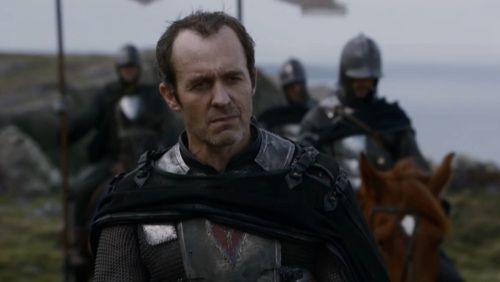
But what's the alternative? I've spent far too much of my leisure time in the last year listening to the History of Rome podcast and watching "Game of Thrones," and one thing those tales drive home is the challenge of succession. Many (perhaps most?) of the battles fought by soldiers of the Roman Empire were fought against other Roman soldiers, either putting town a rebellion or taking the throne from a usurper. Passing power along by bloodline can help -- at least it's some sort of system -- but it can create just as many problems when an heir proves incompetent or there are multiple legitimate claimants. One of the reasons for the successes of the Roman emperors of the 2nd century AD was that most of them did not have male children -- they were able to choose qualified successors and groom them for leadership. Marcus Aurelius, of course, did produce a male heir, and he turned out to be an insane Joaquin Phoenix, ending the empire's century of competence.

I find this important because the Roman Empire was pretty much the most advanced civilization the world had ever seen. It had sophisticated systems of currency and trade, an advanced legal system, a functional bureaucracy, not to mention its amazing military capabilities. But they were never able to resolve the problem of succession of power.

And yet this is something we take for granted today. Elections are fought fiercely, but they end. The results are rarely disputed, and basically never with violence. We do not fear for our lives if we pick the wrong presidential candidate, and we do not waste blood and treasure putting down rebellions and ousting usurpers.

No, we're not the only nation to figure this out, but it's nonetheless something to be proud of, especially since so many advanced societies before us failed on this point. So this Independence Day, let's celebrate by volunteering for a candidate, donating money to a campaign, or just watching an attack ad.

Happy Fourth.

Thursday, June 21, 2012

Not "scientifically valid"

Sounds like some of the folks at the Douglas County (Colorado) School District could use a statistics refresher course. Writes the Denver Post:
The Douglas County School District has deemed its spring survey of parents "inconclusive" — a poll in which a majority of responding parents saw the district's suspended voucher program as "unfavorable" and expressed unhappiness with the district's overall direction.
District officials contend that not enough parents participated in the survey to make it a valid representation. As a result, they stamped every page of survey results posted on the district's website in red letters saying: "Inconclusive due to insufficient response rate."
More than 4,900 parents completed the survey. There are approximately 76,500 parents whose children attend Douglas County schools. 
[...]
District spokesman Randy Barber said the approximately 6 percent of parents who responded to the survey this spring was significantly under the 30 percent the district wanted to make it "scientifically valid."
Yes, people usually have more confidence in a survey if it has a higher response rate. But that doesn't mean that the results of this survey aren't valid, and there's nothing magic or "scientific" about the 30 percent threshold. We can conduct very accurate national surveys based on just 1,000 responses -- roughly a fifth of what they managed in this parent survey. More important than overall numbers is representativeness. That is, does the sample of parents who responded to the survey look roughly like the overall population within the school district? This can probably be figured out using demographic questions (although the only one I can find in the survey is just a race question. Area of residence, income, family size, ideology, etc., would be really helpful here.) 


Of course, maybe the reason that the district rejected the results as "inconclusive" has less to do with sample size than it does with the results, which were less than flattering for the district. If they really want to know what district parents think, they could conduct a survey of a representative (and probably smaller) sample and get solid results. But if they just want certain results, then by all means they should just keep doing surveys until they get the answers they want.

Wednesday, June 20, 2012

The foie gras lobby

On July 1st, the production and sale of foie gras will become illegal in California, a result of a state law passed back in 2004. Ed Leibowitz at The Atlantic has an entertaining story about some of the lobbying surrounding this new law. According to the article, over 100 chefs are now lobbying for the reversal of the law, and they have some effective talking points:
“Foie gras is low-hanging fruit,” [Chef Josiah] Citrin* says, in the resigned tone of someone explaining the obvious. “You think the foie gras industry has money to fight, like the beef industry?” He points out that a class barrier also keeps voters from rallying in defense of foie. “You go out in the street and ask 25 people ‘What do you think about fattened duck liver?’ and they’ll say ‘Ooh, I don’t like that.’ You don’t have to take a poll.”
Citrin has joined a coalition of more than 100 chefs lobbying for the reversal or suspension of the foie gras ban. (The coalition, which insists that it does not oppose animal rights, says it favors the humane treatment of all livestock, waterfowl included.) In a few days, many of the chefs will travel to Sacramento to lobby on foie’s behalf, and in the weeks ahead, high-end restaurants will hold foie-filled dinners to raise funds for their quixotic fight.
On the other side of the issue is the ever-quotable John Burton, the one-time lion of the state legislature and now chair of the state Democratic party:
The chefs’ coalition has warned about the ban’s potential impact on California’s high-end restaurants in a bad economy, and the state’s diminished standing in the world of haute cuisine. “California will no longer be a food destination?,” Burton said. “In other words, a guy’s sitting around and says ‘Let’s go to California. They’ve got these beautiful views. They’ve got Yosemite, the bridges, Universal City, the redwoods. Oh, shit! They don’t have foie gras! Let’s go to South Dakota.’”
Nor did he buy the argument that a restaurant could go broke without foie gras, unless that restaurant’s specialty was incredibly narrow. “If you had the House of Foie Gras, you’d be fucked,” he said.
Anyway, a great story that manages to humanize both sides of a lobbying battle, over an issue on which the vast majority of people probably don't have strong opinions and will never be affected.

*Disclosure: Citrin is a family friend.

Thursday, June 14, 2012

Networks

Light posting here this week, as I'm attending the Political Networks conference in Boulder. You can follow all the action at the Political Networks Twitter feed, or on the hashtag #polnet2012.

Tuesday, June 12, 2012

Zombie fundraising meme

Last week, Politico Buzzfeed ran a story claiming that Obama is having fundraising problems, noting that many of his 2008 donors haven't given him any money this year. (Here was my response to that.) Today, it followed up with an analysis of where Obama's fundraising shortfall relative to 2008 has been greatest. For the record, I was actually interviewed for this story, and I explained to the reporter (Rebecca Elliott) that I didn't think there was any there there. That is, Obama hasn't received donations this year from a lot of his 2008 donors for one main reason: he didn't face a primary challenger this year, while he was in one of the most competitive presidential nomination races in modern history four years ago. We had a good chat about this, but nothing along these lines made its way into the article.

The new article, meanwhile, starts from the premise that Obama is suffering, and tries to explain why his fundraising shortfall relative to 2008 has been greater in some states than in others. But again, I just don't think there's much here. As Elliott reports, 88% of Obama's 2008 donors nationwide have yet to contribute to him this year, and when you break those figures down by state, the highest shortfall is in Oregon at 91%. Now, if the mean is 88% and the highest value is 91%, it just doesn't sound like we're talking about a whole lot of variation here. The political scientists quoted in the story do a valiant job coming up with some reasons why Western state donors would experience higher dropoff, but it just doesn't sound like there's much of a phenomenon to explain here.

I understand the desire to run stories about how Obama is having a harder time this year than he did in 2008, and that is certainly true in many measurable ways. And who knows -- maybe we'll ultimately find that he did have a hard time raising money. But drawing these comparisons between a campaign with a well-funded opponent and a campaign with no opponent is misleading, and terribly, terribly frustrating.

Update: I inaccurately claimed that the above stories were from Politico. Rather, they were from Buzzfeed.