Newt's out. I don't suppose I can say anything about him that hasn't already been said. But I will offer one mea culpa. I used to say that Gingrich had never won an election outside of Georgia and never would. I was wrong. He won Georgia and South Carolina. So there's that.
I would say I'll miss him, except I'm sure I'll be seeing him on TV multiple times a week for at least the next 20 years.
Thursday, April 26, 2012


Remembering Paul Sandoval

I had a chance to speak with him in 2005, and it was a great interview. It was one of the first confirmatory pieces of evidence I'd collected suggesting that the Informal Party Organization model I used to describe California politics transported well to other states. Here was a guy who made his living running a tamale shop but managed to become highly influential in city and state politics through his control of the resources needed to win primary elections. As one story has it, Sandoval sat in the back of his La Casita restaurant with the Salazar brothers in the 1990s and determined which one of them would run for which office and when, charting out a career that ultimately led to Ken in the U.S. Senate while his brother John served in the U.S. House.
It's hard to know just what sort of title to give such a man. Yes, he was a restauranteur and a former state senator, but his power, his energy, and his legacy were devoted to building and managing a Democratic coalition in Denver and Colorado politics, even though that doesn't appear on a business card. I suppose "godfather" or "boss" are appropriate, if perhaps unnecessarily pejorative. I'll stick with "leader" for now.
Tuesday, April 24, 2012
Primary whiffs
Jim Newell's rundown of bad presidential nomination forecasts is a bit dickish, but quite funny. Unsurprisingly, I take some issue with his attack on political scientists, mainly Jonathan Bernstein, for thinking Tim Pawlenty had a better shot than was generally acknowledged.
Newell treats pretty much every wrong prediction as equally wrong. And fine, if you make a prediction, you take a chance at being ridiculed, even if your candidate "should" have won. But Pawlenty was a serious player -- a governor with conservative credentials from a moderate state. That's just the sort of person that often gets nominated! Saying a Pawlenty prediction is no better than a Bachmann or a Trump prediction is like saying that predicting the Broncos to win the last Superbowl was no better than predicting the Calabasas High JV Coyotes to win it. One had a legitimate shot. The other never did.
Lack of enthusiasm for Obama demonstrated by enthusiasm for Obama
Here's another entry for the "Problems Obama Doesn't Actually Have" file. An article in today's Denver Post tries to make the case that young voters' enthusiasm for Obama isn't quite what it was four years ago:
Maybe the evidence lies in the quotes? The article includes quotes from four CU students. The first is unapologetically pro-Obama. The second describes Boulder as pro-Obama. The third, an officer in the campus Republican group, is vaguely critical of Obama, and the fourth is somewhat lukewarm toward Obama. This is the basis for a conclusion that enthusiasm is waning? (The other quotes are from a political consultant and a political scientist seeking to explain the enthusiasm gap for which there is no evidence.)
Oh, the article also cites a study showing that fewer than half of younger voters are "absolutely certain" about whom they will vote for in November, but that doesn't really tell us anything about enthusiasm or expected voter turnout.
So, to review: the quantitative evidence suggests that there's just as much enthusiasm for Obama as there was four years ago, and the qualitative evidence is mixed. I'd love to know how the author or the headline writer reached their conclusions.
Now, this isn't to say that enthusiasm for Obama isn't down since 2008 -- it may very well be, although this article certainly hasn't provided the evidence to support that conclusion. But to the extent we're seeing fewer Obama stickers on backpacks and laptops this year than we did in 2008, we might note an important contextual difference: the lack of a primary opponent. I had several students take leave four years ago to volunteer in Democratic contests in Iowa, New Hampshire, and Ohio. The fact that they're not doing so this year has less to do with an enthusiasm gap than the lack of Democratic contests in those states. My guess is that enthusiasm will be running plenty high on both sides come September.
When then-junior Sen. Barack Obama came to the University of Denver in 2008, the Democratic presidential hopeful was greeted by long lines and a crowd full of youthful enthusiasm. And while his return to the state for tonight's appearance at the University of Colorado at Boulder more than four years later has produced similarly long waits for tickets, the other response — enthusiasm — is lurching along.That's the first paragraph. Let that sink in for a second. The one piece of hard evidence we have so far that would allow us to measure student enthusiasm -- long lines to obtain tickets -- suggests just as much enthusiasm as existed four years ago. So where's the evidence that there's less enthusiasm?
Maybe the evidence lies in the quotes? The article includes quotes from four CU students. The first is unapologetically pro-Obama. The second describes Boulder as pro-Obama. The third, an officer in the campus Republican group, is vaguely critical of Obama, and the fourth is somewhat lukewarm toward Obama. This is the basis for a conclusion that enthusiasm is waning? (The other quotes are from a political consultant and a political scientist seeking to explain the enthusiasm gap for which there is no evidence.)
Oh, the article also cites a study showing that fewer than half of younger voters are "absolutely certain" about whom they will vote for in November, but that doesn't really tell us anything about enthusiasm or expected voter turnout.
So, to review: the quantitative evidence suggests that there's just as much enthusiasm for Obama as there was four years ago, and the qualitative evidence is mixed. I'd love to know how the author or the headline writer reached their conclusions.
Now, this isn't to say that enthusiasm for Obama isn't down since 2008 -- it may very well be, although this article certainly hasn't provided the evidence to support that conclusion. But to the extent we're seeing fewer Obama stickers on backpacks and laptops this year than we did in 2008, we might note an important contextual difference: the lack of a primary opponent. I had several students take leave four years ago to volunteer in Democratic contests in Iowa, New Hampshire, and Ohio. The fact that they're not doing so this year has less to do with an enthusiasm gap than the lack of Democratic contests in those states. My guess is that enthusiasm will be running plenty high on both sides come September.
Sunday, April 22, 2012
Squid links
- John Sides on the "Is Obama in trouble with..." stories.
- Bill Clinton has endorsed seven Democrats in congressional primaries this year. All of them backed his wife for president in 2008, and six of them are running against people who backed Obama.
- Is Facebook making us lonely? Um, no.
- The dangers of bad maps in wartime, from Susan Schulten.
- Wise counsel from Ezra Klein and Lynn Vavreck: We are not normal.
- Friedman logic: 1) I have lousy cell reception on Amtrak. 2) ??? 3) Bloomberg!
- Value added assessment, and what's really wrong with higher education, from the Rude Pundit.
- The iceberg that struck the Titanic was photographed multiple times by other ships. It likely survived a few years after that incident, but probably didn't live to see World War I.
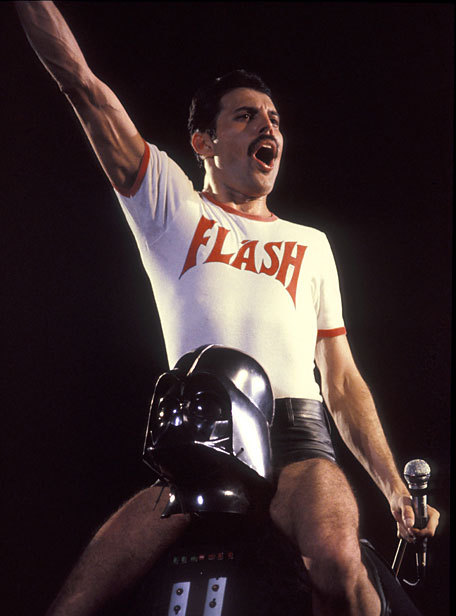
- Yep, Freddie Mercury was the most awesome person ever.
- Scandinavia dominates the world in metal bands per capita.
Saturday, April 21, 2012
Poor Obama failing to raise funds he doesn't need
Last September, Nick Confessore wrote in the NYT that the Obama campaign was failing to secure funds from small donors like it did in 2008. Today he's written almost the complete opposite story and still gotten it wrong, which is kind of amazing, really. As he writes:
It is, admittedly, hard to find a good point of comparison for Obama at this stage. Here's one, though: George W. Bush was an incumbent president facing no primary opponents in 2004. By the end of March 2004, his campaign had raised around $186 million, which is something like $225 million in 2012 dollars. So Obama's a bit shy of that, although the story notes that Obama has spent a lot of effort doing fundraising with the DNC, which might make for an important distinction. It is also possible that the fundraising environment today is so completely different from what it was eight years ago as to make comparisons meaningless. But the direct comparison to 2008 is highly misleading.
President Obama’s re-election campaign is straining to raise the huge sums it is counting on to run against Mitt Romney, with sharp dropoffs in donations from nearly every major industry forcing it to rely more than ever on small contributions and a relative handful of major donors.
So now Obama is relying upon the small donors who allegedly weren't contributing to him. Okay. But what does Confessore mean by "sharp dropoffs in donations"? Well, it turns out that's compared to the same time period in 2008. Why might that be a bad comparison? Confessore provides an explanation further down in the article:
With no primary to excite his base, the economy struggling to rebound, and four years of political battles with Wall Street and other industries taking their toll, Mr. Obama’s campaign raised about $196 million through March, compared with $235 million at the same point in 2008 [emphasis added].The lack of a primary is really important! At this point in 2008, Obama was locked in a tight contest with Hillary Clinton that would go on until June. He really needed the funds. He might not need them as much today, as Confessore again points out:
And with no primary to fight, Mr. Obama is spending much less than he was at this stage in 2008: He had about twice as much money in the bank at the end of March than he did four years ago.So Obama is suffering compared to 2008 even though he has twice as much cash on hand?
It is, admittedly, hard to find a good point of comparison for Obama at this stage. Here's one, though: George W. Bush was an incumbent president facing no primary opponents in 2004. By the end of March 2004, his campaign had raised around $186 million, which is something like $225 million in 2012 dollars. So Obama's a bit shy of that, although the story notes that Obama has spent a lot of effort doing fundraising with the DNC, which might make for an important distinction. It is also possible that the fundraising environment today is so completely different from what it was eight years ago as to make comparisons meaningless. But the direct comparison to 2008 is highly misleading.
Friday, April 20, 2012
Palin, Secret Service, and dog whistles
Somewhat related to the Secret Service prostitution scandal, it was revealed last night that one of the agents recently fired in the scandal had been assigned to then-vice presidential candidate Sarah Palin in 2008 and was "checking her out" and posting about it on Facebook. Obviously, that's truly unprofessional behavior and shouldn't be tolerated. And obviously, that won't faze Palin, who has a famously thick skin about these sorts of things.
No, wait, I forgot that Palin has the thinnest skin in politics, and whenever anyone disses her, she gets to go on Fox to talk about it. (Damn, I want that deal.) So here's the transcript of a truly painful interview with Greta Van Susteren in which Palin repeatedly tries to link the Secret Service agent's behavior to Barack Obama (who was a U.S. Senator at the time of the incident) and Van Susteren tries (unsuccessfully) to keep the train on the rails. A few key moments:
Van Susteren then tries to suggest that maybe Obama should just be held accountable for things that happened during his presidency. But Palin wasn't buying:
Then Van Susteren concedes that the buck does stop with the president. And Palin's all over that.
No, wait, I forgot that Palin has the thinnest skin in politics, and whenever anyone disses her, she gets to go on Fox to talk about it. (Damn, I want that deal.) So here's the transcript of a truly painful interview with Greta Van Susteren in which Palin repeatedly tries to link the Secret Service agent's behavior to Barack Obama (who was a U.S. Senator at the time of the incident) and Van Susteren tries (unsuccessfully) to keep the train on the rails. A few key moments:
Palin: Well, this agent who was kind of ridiculous there in posting pictures and comments about checking someone out. Well, check this out, bodyguard. You're fired. And I hope his wife kicks his ocoli and sends him to the doghouse, as long as he's not eating the dog, along with his former boss.Oh my God, she totally went there! No, I don't know what an ocoli is, but she totally jumped on the Obama-eats-dog meme, giving a subtle shout-out to all the hockey moms out there who disapprove of presidents who eat dogs, or something.
Van Susteren then tries to suggest that maybe Obama should just be held accountable for things that happened during his presidency. But Palin wasn't buying:
Well, Greta, it's not just this particular issue, though, with GSA or with the Secret Service, it's everything that's going on in our federal government right now. What are we getting for the tax dollars that are being taken from our incomes, being sent to the federal government today?
We're getting higher unemployment numbers than when Barack Obama first took over. We're getting less energy [security] than when Barack Obama took over....
And the number one thing, Greta, that he is responsible for is -- he today violating Article I, Section [9], Clause 7 of the United States Constitution in not having a budget. Going on three years, over a thousand days with no budget, no blueprint to run our federal government!Is this a conservative talking point that I missed? Obama is violating the Constitution by not having a budget? Because you know who's supposed to create a budget? Yeah, the Congress -- that's why is mentioned in Article I. Not that the president plays no role here, but suggesting that Obama is somehow violating the Constitution is a real stretch.
Then Van Susteren concedes that the buck does stop with the president. And Palin's all over that.
Yes. Exactly. That's the bottom line. And thank God we live in America, where in this republic, we have these democratic votes that are taken, you know, every four years in November. And we get to decide whether we want the positive change that we so seek, that we so need in order to keep our nation solvent.
Thank God that we have that freedom. Thank God that we have the United States military fighting for the defense of freedom!Yeah, well spoken. You might have thought that after four years with a lot of interviewing experience, Palin would be less of a trainwreck on camera than she was in 2008. You'd have been wrong. For the life of me, I don't know why these interviews keep happening. Are they good for Fox? Are they good for Republicans? Are they good for Palin? I'm kind of doubtful on all three counts.
Subscribe to:
Posts (Atom)